
The Anatomy of a Plugged Draw: How Surgical Tools Actually Fix It
The Physics of Airflow in Premium Tobacco
To understand why a cigar draws tightly, one must first appreciate the delicate physics of its construction. A premium hand-rolled cigar is not a solid block of tobacco; it is an engineered bundle of air channels. When a master roller (torcedor) bunches the filler leaves, they typically employ either the Entubar method (rolling each leaf into an individual scroll) or the Accordion method (folding the leaves back and forth). These techniques are designed to ensure that air flows evenly from the foot of the cigar to the head.
However, even the most experienced torcedores are human, and organic materials are inherently unpredictable. A plugged draw usually occurs at the 'head' or the 'shoulder' of the cigar. Because the roller must taper the tobacco to apply the cap, the physical density of the leaves naturally increases at the head. If too much leaf is bunched in this narrow taper, or if a leaf is twisted during the wrapping process, it creates a physical constriction—a knot that acts as a dam, blocking the passage of smoke.
The Role of Relative Humidity and Leaf Expansion
Often, a draw issue is not entirely the fault of the roller. Storage conditions play a massive role in how filler leaves behave. Tobacco leaves are highly hygroscopic, meaning they absorb moisture from their environment. When stored at high relative humidity (above 70% RH), the filler tobacco expands in volume.
Because the wrapper leaf restricts outward expansion, the expanding filler leaves compress against each other. This closes the microscopic air channels within the bundle. A cigar that draws beautifully at 63% RH can easily become a plugged straw at 72% RH. This is why modern aficionados are increasingly shifting their humidors to a drier 62%–65% range, particularly for dense Nicaraguan or Cuban cigars that are prone to swelling.
The Problem with Traditional Spikes
When faced with a plugged cigar, the classic instinct of many smokers is to reach for a toothpick, a paperclip, or a thin metal spike. While this might seem logical, it often makes the problem worse. Inserting a smooth spike into a dense knot does not remove any tobacco; it simply displaces it. The spike pushes the compressed leaves outward, packing them even tighter against the wrapper.
This outward pressure often causes the wrapper leaf to split, especially near the head where the wrapper is under tension. Once the wrapper splits, the cigar loses its airtight seal, letting air escape from the side and rendering the draw completely useless. Furthermore, once you pull the spike out, the elastic tobacco leaves often bounce back, closing the temporary channel and leaving the plug exactly as it was.
The Surgical Approach: Carving the Airway
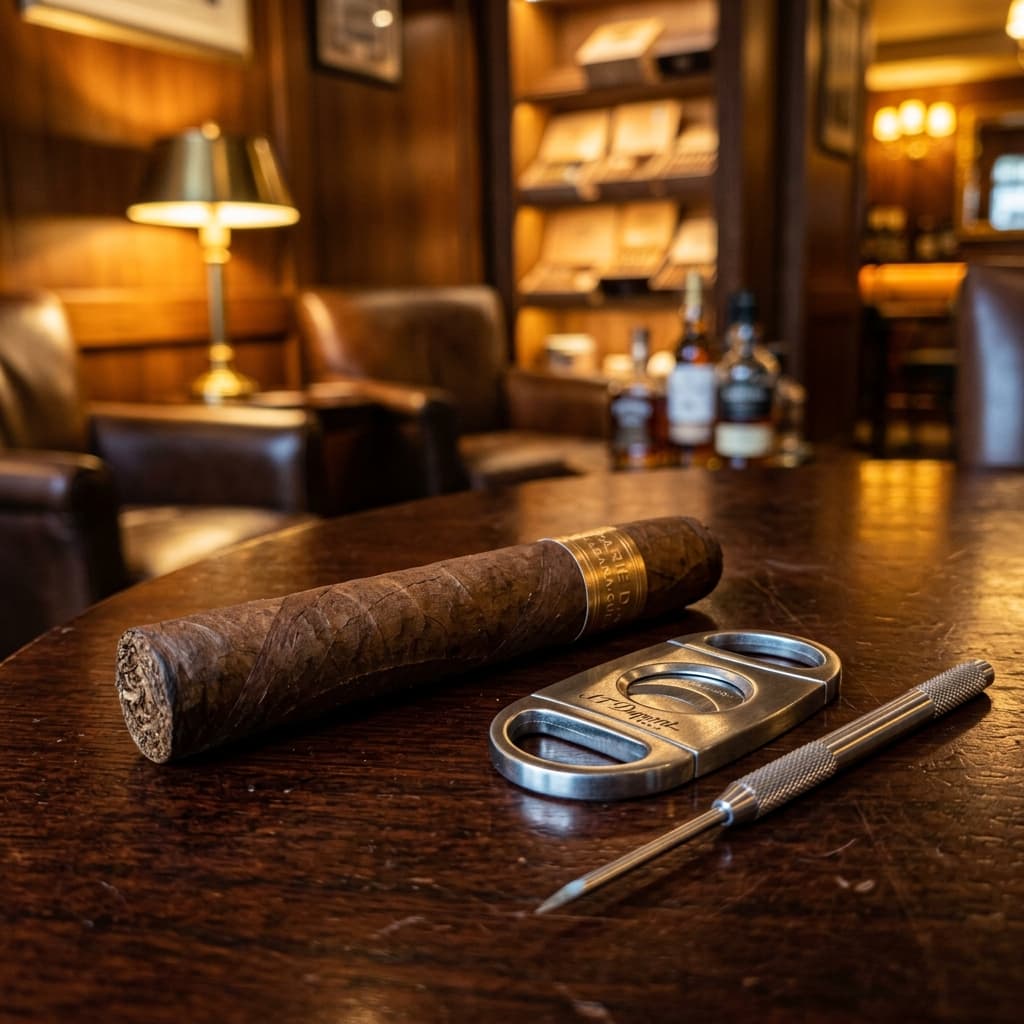
This structural challenge is why specialized surgical draw tools—most notably the PerfecDraw—have revolutionized the cigar community. Unlike a simple needle, these tools are engineered with tiny, backward-facing serrations and sharp barbs along the tip. They act as miniature drills or harpoons designed for delicate surgery.
When you insert a draw tool into the head of a plugged cigar, the sharp tip bypasses the leaves. As you rotate the tool and gently pull it back out, the backward-facing barbs catch the specific knots of compressed tobacco and pull them out. Rather than compressing the tobacco outward, the tool actually carves a physical airway through the core of the cigar, extracting a small pinch of leaf and relieving the structural tension. The wrapper remains intact, and the air channels are permanently opened.
How to Perform a Clean Extraction
Using a draw tool requires patience. To avoid ruin, never push the tool forcefully into the cigar. Start by clipping the cap as you normally would. Insert the tool slowly through the center of the head, twisting it gently clockwise as you go. Go in about one to two inches—the most common location for plugs.
Once you feel resistance, rotate the tool a few times to let the barbs grab the blockage, and pull it straight out. You will see a small nest of shredded tobacco caught in the teeth of the tool. Clean the tip, take a test draw, and repeat the process only if necessary. A single extraction is usually enough to restore perfect airflow, allowing you to enjoy the flavor profile exactly as the blender intended.
In the world of hand-rolled cigars, force is the enemy of flavor. Relieve the tension, clear the path, and let the smoke breathe.