
The Geometry of the Cap: Decoding the Engineering of Estelí
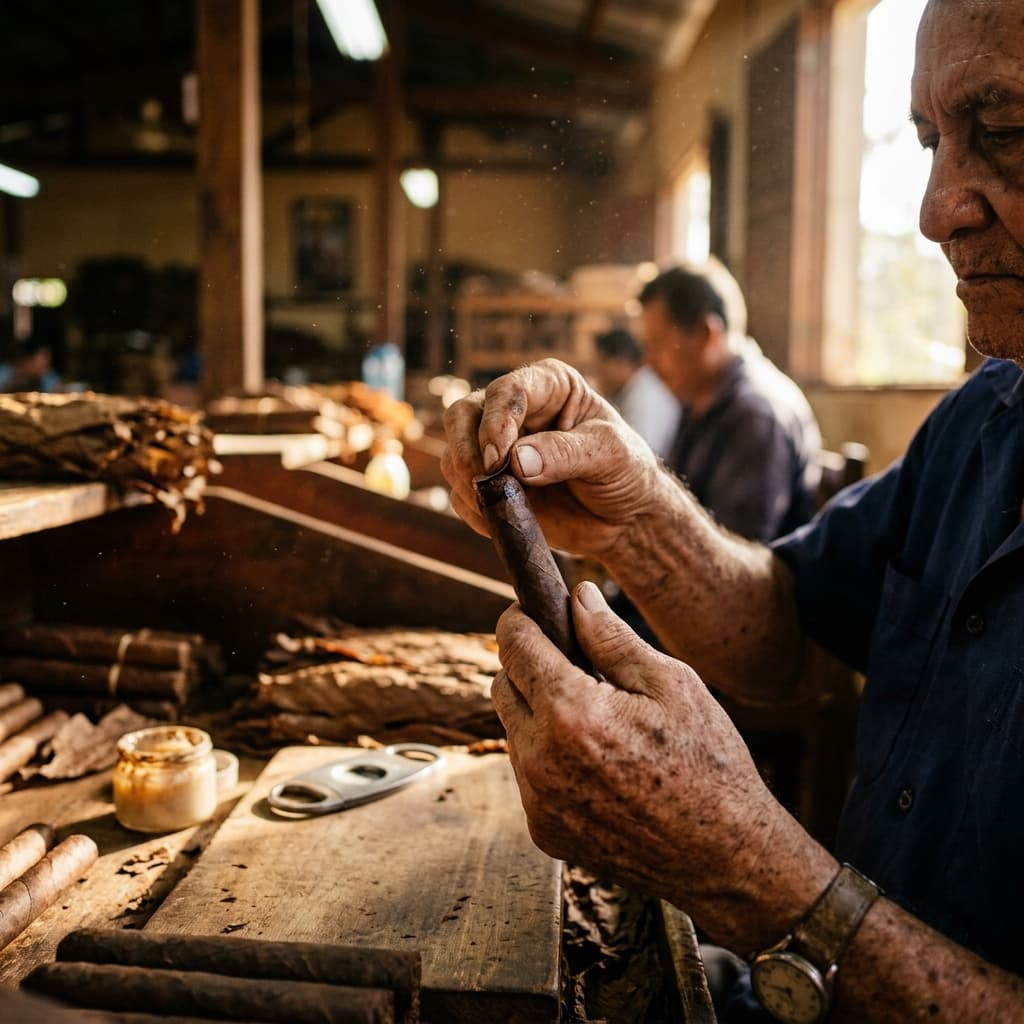
The Architect’s Thumb
In the quiet galleries of the world’s leading cigar factories, there is a specific sound: the sharp, rhythmic snap of a chaveta hitting a wooden board. This isn't just labor; it's the punctuation of an architectural process. When we look at a premium cigar from makers like the Garcias, we often overlook the 'cap'—the small circle of tobacco glued to the head. Yet, this tiny piece of leaf is the structural integrity of the entire experience. It is the dam that holds back the pressure of the draw and the heat of the smoke.
Applying a cap requires a level of dexterity that takes years to perfect. The roller must select a piece of leaf that matches the wrapper's elasticity and oil content perfectly. Using a vegetable-based glue, they apply the 'three-seam' cap—a traditional technique where the leaf is wound around the head in concentric circles. If the tension is off by a single millimeter, the cap will fail under the blade of your cutter, unraveling months of fermentation and aging in a matter of seconds.
The Ritual of Inspection
Walk through any top-tier Nicaraguan facility and you will see the 'Grade A' rollers sitting at the front. These are the individuals trusted with the most complex vitolas—the Torpedoes and Perfectos. Here, the cap isn't just a lid; it's a structural necessity. A Torpedo head, rising to a sharp point, requires the roller to stretch the tobacco leaf to its absolute limit without tearing the delicate veins. It is a feat of engineering that defies the brittle nature of dried leaves.
Master inspectors like José 'Pepín' Garcia are famous for their sensory memory. They don't just look at a cigar; they read the tension of the wrapper with their fingertips. A 'single cap' might be the standard, but in the upper echelons of craft, they often use double or even triple caps to ensure that the cigar can withstand the humidity changes of global travel. It is this obsessive attention to the smallest point of the cigar that separates a commodity from a masterpiece.
The Final Punctuation
Why does this matter to the aficionado? Because the cap is where the oils concentrate. As you draw air through the cigar, the tapered geometry of the head focuses the smoke onto a specific area of your palate. A poorly applied cap creates turbulence in the smoke, masking the subtle notes of earth and spice that the blender worked so hard to achieve. When you clip the end of your cigar tonight, take a moment to look at the seams. You are looking at the final signature of a master who spent decades learning how to make a single piece of leaf hold an entire tradition together.
The cap is the bridge between the farmer's field and the smoker's palate; if the bridge is weak, the journey ends in disappointment.